
Maintenance work often involves removing components that are tightly fitted or have been in place for a long time. In these situations, using a bearing puller becomes essential. Bearings are commonly found in motors, pumps, gearboxes, fans, and other rotating equipment, and removing them the wrong way can cause damage to parts that are still perfectly usable. It can also create safety risks and add downtime that could have been avoided.
For workshops and industrial maintenance teams in Malaysia, having the right tools on hand makes a noticeable difference in both efficiency and safety. When technicians have proper equipment, the job becomes more controlled, more predictable, and less likely to result in damaged shafts, worn housings, or misaligned replacements.
Why proper bearing removal matters
Bearings are designed to fit securely in place. That secure fit is what allows machinery to run smoothly under load, speed, and long operating hours. Over time, heat, friction, vibration, and continuous pressure can make a bearing even harder to remove. In some cases, corrosion or contamination can make the bearing feel “stuck”, even when the assembly looks normal from the outside.
When technicians try to force a bearing out with improvised methods such as hammering, prying, or hitting the shaft directly, it can leave dents, scratches, or uneven surfaces. Even small damage can cause big problems later, especially when the new bearing is installed. A slightly damaged seat or misaligned shaft can lead to noise, vibration, overheating, and early bearing failure.
Using the correct removal tool allows controlled and even force to be applied. It reduces the chance of applying pressure at the wrong angle, which is one of the most common reasons surrounding components get damaged. Proper removal is not only about getting the bearing out. It is also about protecting the parts around it so the equipment can be restored properly after servicing.
Understanding different bearing removal tools
Not every bearing puller looks the same. Bearings can sit in different positions, and access can vary depending on the equipment design. Some are easy to reach from the outside. Others sit deeper inside a housing, surrounded by components that limit space.
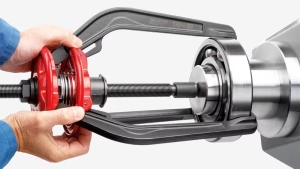
That is why different tool types exist. Some are designed to grip the bearing from the outside and pull it outward. Others are designed for internal removal where the bearing is inside a bore and needs a tool that expands inside and pulls from within. In some situations, a technician may need a tool that can handle narrow spaces, while other jobs may require stronger capacity because the bearing is larger or more tightly fitted.
Choosing the right tool helps the job go smoother. A tool that grips securely reduces slipping. A tool that aligns properly reduces uneven pulling. And a tool that matches the bearing size and position reduces stress on both the technician and the equipment.
When the tool fits the situation, removal becomes more predictable. Instead of repeated attempts and forceful movements, the technician can apply steady pressure and remove the part in a controlled way.
Better safety, better control
Safety is always a concern during mechanical maintenance. When components are under tension, sudden release can cause unexpected movement. This is especially risky when technicians are working close to heavy assemblies or using improvised methods that require aggressive force.
Well designed removal tools improve control because they apply force evenly and gradually. This reduces sudden jolts and makes it easier for technicians to maintain stable positioning. It also lowers the risk of the tool slipping off under pressure, which can happen when using unsuitable tools or poor gripping methods.
A more controlled removal process also protects the working area. In many workshops, maintenance jobs are done in active spaces where other work may be happening nearby. Using proper tools reduces the chances of accidents and helps technicians work more confidently and safely.
Supporting faster and cleaner maintenance workflows
In industrial environments, downtime is expensive. When a machine stops, it affects production schedules, labour planning, and delivery timelines. Even in smaller workshops, delays can create a chain reaction where multiple jobs get held up.
Having suitable removal tools available helps technicians complete servicing work more efficiently. A job that becomes difficult using improper methods can often be completed faster when the correct tool is used. More importantly, the risk of damaging surrounding components is reduced. That means fewer cases where a small removal task turns into extra repair work, such as shaft replacement, housing rework, or alignment issues.
Efficiency is not only about speed. It is also about doing the job properly the first time. Clean removal supports cleaner installation. When the surrounding surfaces are not damaged, fitting the new bearing becomes easier, and the equipment can return to operation without extra troubleshooting.
Protecting equipment and extending part life
One overlooked benefit of proper bearing puller is how it protects parts that are still in good condition. In many cases, only the bearing needs replacement. The shaft, housing, seals, and surrounding components are still usable. Improper removal methods can damage those parts and create unnecessary replacement costs.
When removal is done correctly, it reduces wear on the assembly and helps keep the equipment in better condition over time. It also supports better long term reliability. If replacement bearings are installed into smooth and undamaged seats, they tend to perform better and last longer.
This matters especially for equipment that runs long hours or operates under heavy load. In these environments, small installation or alignment issues can shorten part life quickly. Proper maintenance tools help reduce those risks.
Tool durability and long term value
Workshop tools are often subjected to heavy use. A tool may be used repeatedly on tight fittings, stubborn bearings, or assemblies that have been running for years. Low quality tools can bend under pressure, wear out quickly, or fail to hold a strong grip. When tools fail, it creates delays, frustration, and potential safety risks.
Durable tools are designed to handle repeated use under load. Strong materials, stable gripping mechanisms, and a reliable tightening system help the tool stay consistent job after job. Over time, investing in durable equipment can reduce replacement costs and improve day to day reliability in workshop operations.
For maintenance teams, a dependable tool also supports standard procedures. When the tool performs predictably, technicians can work more confidently and follow consistent methods.
Choosing a supplier that understands industrial needs
Beyond the tool itself, sourcing from a supplier that understands industrial environments makes the process easier. Maintenance requirements vary across industries. What a small workshop needs can be different from what a large facility requires, especially when dealing with different machine sizes and operating conditions.
A supplier with industrial experience is more likely to carry practical tool options for real applications and support technicians in selecting suitable choices based on the task. This helps reduce guesswork and improves the chance of choosing the right tool for the job.
At Dalson Industrial Supplies, we work with workshops and industrial clients who rely on dependable tools for daily maintenance and repair work. The focus is on practical solutions that support safe work, consistent results, and smoother servicing routines.
Keeping maintenance work steady and predictable
Using the right tools helps maintenance teams work with more control, better safety, and fewer avoidable mistakes. Bearing removal is one of those tasks that looks simple until the part refuses to move. With proper tools in place, technicians can handle these situations more smoothly and reduce the chance of damaging shafts, housings, and other components.
If you’re sourcing tools for workshop or industrial use, you can browse options through Dalson Industrial Supplies. If you need support choosing the right tool for your application, you can reach out here and our team will assist.